
A Virginia, Minnesota job move feels easiest when the day itself can be organized. That is why the local question is not just, “Where can I work?” It is also, “What route will get me there, where will I live, and what else has to fit around the shift?” In this part of the Iron Range, the answer often starts with Minnesota North College, Arrowhead Transit, and the school districts that shape family schedules. The Virginia campus serves health, education, and business operations, while the Eveleth campus is the technical side of the system, with programs such as welding, construction, and graphic design. That split gives applicants two different ways into the local labor market, and it helps explain why the same job move can feel smooth for one person and complicated for another.
Two campuses, two kinds of starting points
Minnesota North College is more than a college name on a brochure. In Virginia, the campus is tied to careers, college transfer, and lifelong learning, and its program areas map directly to office, school, and clinic support work. That matters because a newcomer who wants a steady job path may be looking at health care administration, education support, billing, reception, or business operations rather than only front-line clinical or teaching roles. In Eveleth, the campus serves the technical side of the Mesabi Range with hands-on programs that better fit shop work, fabrication, and construction-related careers. The college also uses campus-specific registration, so students and employers cannot assume that every credential is available at every location.
One practical detail makes that even more important: Mesabi Range Virginia offers student housing, and the college says Eveleth students can use housing in nearby Virginia because Eveleth does not have on-campus housing. For a person moving for work or training, that is not a small convenience. It changes whether a short-term job, a retraining program, or an internship is realistic without a car. It also means that a newcomer should think about campus choice and housing at the same time, not one after the other.
Transit keeps the region connected
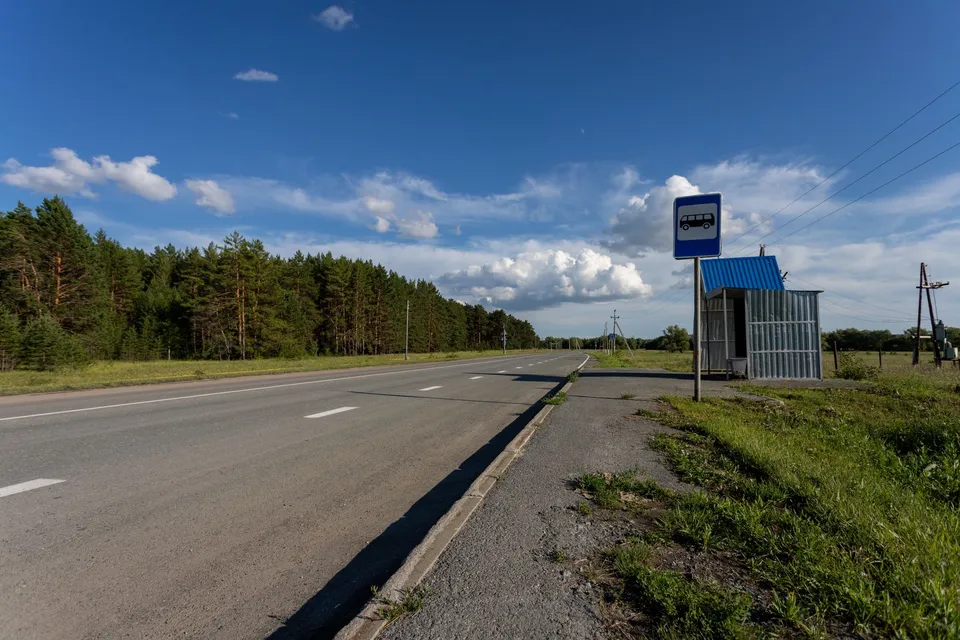
Arrowhead Transit is the other piece that turns a regional job search into something livable. Its North St. Louis County service page says it offers dial-a-ride within Virginia, Mountain Iron, and Ely city limits, plus scheduled service in Eveleth, Gilbert, Aurora, Cook, Hibbing, and more. It also provides bus transportation from Virginia to Duluth. The Virginia and Mountain Iron dial-a-ride has published weekday, Saturday, and Sunday hours, while the Virginia–Eveleth–Gilbert bus schedule is posted for weekdays. That means the local commute is real, but it is also time-sensitive. A shift that looks reasonable on paper can become difficult if the start time falls outside the transit window.
The fare structure is part of the same story. The Virginia and Mountain Iron dial-a-ride is posted at $3 one way, and the Virginia–Eveleth–Gilbert bus is posted at $5 per ride. Those are not abstract transportation facts; they shape how often someone can reliably travel for work, class, errands, or appointments. In a place where workers may live in Virginia, train in Eveleth, and shop or get care in Mountain Iron, transportation is not a side issue. It is one of the systems that decides whether a schedule works at all.
School districts shape the household clock
For families, the local day usually revolves around schools as much as around employers. Rock Ridge Public Schools combines Virginia, Eveleth, and Gilbert, and its school list includes North Star Elementary, Laurentian Elementary, Parkview Elementary, Rock Ridge High School, the Alternative Learning Program, and the Life & Learning Center in Eveleth for special education services. That structure matters because school location, bus access, and special-services placement can shape where a family lives and what shifts are realistic. A worker considering a relocation does not just need a job; they need a school arrangement that fits the job’s hours.
Mesabi East creates a different family geography. Its official materials say it serves Aurora, Hoyt Lakes, and Biwabik, and its site also highlights community education and adult basic education. The district’s preschool information says qualifying families can receive a three-day pre-K option free of charge. For households that are balancing work, child care, and retraining, that is real infrastructure, not just an education label. It can help parents keep working while a child starts school, and it can help adults keep moving toward a credential without leaving the region.
Housing is part of the employment decision
Virginia’s housing picture is not passive. The city’s website links to rental information, residential lots for sale, city lots for sale, property-maintenance and preservation code, vacant-building registration, and energy-efficiency financing. That means housing in Virginia is being managed as a municipal issue, not left entirely to chance. For a newcomer, that matters because the local decision is often about more than rent. It can include building condition, lot availability, code compliance, and the possibility of a house that needs work before it feels ready for a family.
Health care adds another layer. The city lists Essentia Health-Virginia and Laurentian Medical Clinic in Virginia, and Fairview Mesaba Clinic in Mountain Iron. That tells a relocating household that routine care, follow-up visits, and some services may require travel across the core communities rather than staying in one city. For people with young children, chronic conditions, or changing work hours, that regional care pattern can matter as much as the job itself. It is another reason the local move is best understood as a system of linked places rather than as a single destination.
Life beyond work still matters
Virginia’s civic side is unusually visible for a city this size. The city’s homepage points to arts and culture, events, shopping, ATV trails, golf, the public library, murals, and volunteer opportunities. Silver Lake Trail is one of the clearest examples of how public space and daily life overlap: the city says the trail is meant to support safe multimodal transportation between schools, parks, recreation facilities, and downtown. The eastern recreation area proposal goes a step further, but the city says it is still in planning and depends on landowner agreements. That distinction matters. Completed trails affect the daily routine now; proposed projects shape expectations, but not yet the commute or the weekend.
So can a Virginia, Minnesota work move feel manageable? Yes, if the pieces line up. The strongest local pattern is not one employer or one neighborhood. It is the combination of training, transit, housing, schools, and nearby services that lets a person build an ordinary day. In Virginia and the connected Iron Range communities, that ordinary day may start with a campus decision, continue with a bus schedule, and end with a school pickup or clinic visit in a neighboring town. If you are looking for current openings, check virginiamnjobs.com/jobs/, and if you are hiring, contact Express to talk through the kind of daily schedule your next employee actually needs to keep.