
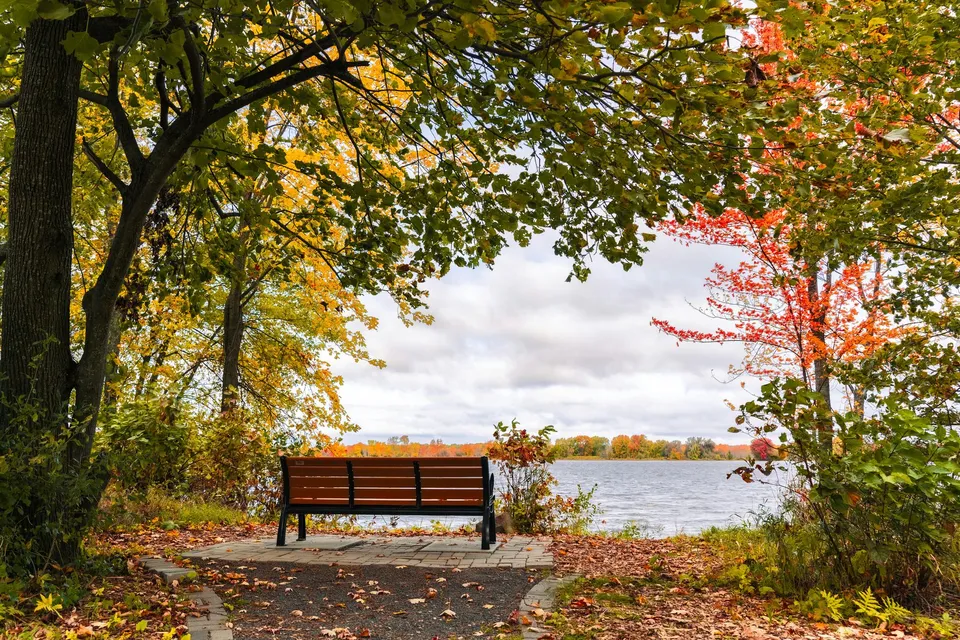
Why Silver Lake Matters to Everyday Life in Virginia, Minnesota
In Virginia, a trail is not just a pleasant place to walk. The city says the Silver Lake Trail reconstruction is meant to create safe multimodal transportation between schools, parks, recreation facilities, and downtown Virginia, and it specifically calls out conflicts among walkers, bikers, strollers, and motor vehicles as part of the problem the project is trying to solve. That makes the trail a practical part of daily movement, not an afterthought for weekends.
That matters for job seekers and newcomers because the easiest place to live is not always the place closest to work. In a city where school schedules, transit routes, clinic visits, and grocery runs all overlap, a short path can do real work. The Silver Lake corridor helps explain how Virginia functions: not as one isolated downtown, but as a set of connected places that people move between all day long.
A local route that does more than one job
The Silver Lake Trail project is a good example of Virginia planning for more than recreation. The city says Phase A began in July 2023 and was completed by June 20, 2024, while later phases moved on to dock construction and other remaining work. That timeline matters because it shows the trail is real, phased, and already partly in use rather than just a concept on paper.
For a working household, that kind of project changes the daily math. A parent may use the trail to get a child to school or sports. A worker may use it to reach downtown errands without adding another car trip. A newcomer may notice that the city is trying to connect neighborhoods, not just beautify the shoreline. The point is not that everyone will walk everywhere. The point is that Virginia gives people a few more ways to move if their schedule, vehicle access, or shift hours make driving inconvenient.
The trail is tied to actual work and school geography
Virginia’s school and transit systems make the trail’s role even clearer. Rock Ridge Public Schools combines Virginia, Eveleth, and Gilbert, and its schools and special-services locations are spread across that district geography. That means families often plan around more than one municipal boundary, and a corridor that supports walking and biking can help fill the gaps between school, home, and after-school activities.
Arrowhead Transit adds another layer. The North St. Louis County schedule shows dial-a-ride service in Virginia and Mountain Iron, scheduled service in Eveleth, Gilbert, and Aurora, and a Virginia–Eveleth–Gilbert bus route on weekdays. It also lists specific Virginia stops such as Laurentian Manor, the Bell Building, Super One North, Essentia, the mall, Super One South, and Target. That is the sort of detail that tells you where daily life is actually concentrated. A trail that ties into those destinations is part of the same mobility system, even if it is not a bus line.
The schedule also reminds workers to think realistically about timing. Transit does not solve every commute, especially when shifts start early, run late, or fall outside posted service. But it does create a backbone for people who work, study, or shop across Virginia, Eveleth, Gilbert, and Mountain Iron. For someone relocating for a job, that can matter as much as the job itself.
What newcomers should notice before choosing a place to live
Virginia’s city pages show that housing is part of the local planning picture, not just a private market issue. The city links to rental information, residential lots for sale, city lots for sale, property-maintenance and preservation code, vacant-building registration, and energy-efficiency financing. In other words, housing here is connected to redevelopment, code compliance, and building condition as much as to rent or mortgage cost.
That is useful for newcomers because it suggests a simple rule: before choosing an apartment or house, look at the neighborhood in context. Is the place close to the route you will actually use? Is it near school pickups, a clinic, or a bus stop? Does it sit within a part of town that feels active year-round or one that depends more on a single road or seasonal use? Virginia’s public pages make clear that these are local questions worth asking.
The college system matters too. Minnesota North College says the Mesabi Range Virginia campus offers student housing, and it notes that Eveleth students can live at the Virginia campus because Eveleth does not have on-campus housing. That detail can help students, apprentices, and career changers who are trying to shorten the distance between class, work, and daily life. It also means Virginia is not just a city with employers; it is a place where people may arrive before they have settled into a long-term home.
A city that is still stitching itself together
The eastern recreation area planning page shows how much of Virginia’s future still depends on land, access, and agreements. The city says a proposed trailhead near the eastern end of Chestnut Street is being explored, and it notes that the project requires landowner engagement and agreements with parties including RGGS, MnDOT, and the DNR. The same page references the Rouchleau-Shaw/Moose-Missabe Mountain mine pit complex, which is a reminder that the city’s modern routes still move through an industrial landscape shaped by older uses.
That is not a drawback; it is part of the local character. Virginia’s public life is built through trails, clinics, schools, transit, college housing, recreation sites, and redevelopment pages rather than a single central business district. The city’s own homepage points residents toward parks and recreation, the public library, medical facilities, volunteer opportunities, and economic development tools. For someone arriving for work, that says something important: this is a place where practical systems matter, and where getting to know the town is part of getting to know the job.
The useful takeaway
If you are moving to Virginia for work, think about the trail first as a local connector. It links to the same everyday pattern that shapes the rest of the city: school routes, transit stops, clinic visits, downtown errands, and recreation after work. That is why Silver Lake is worth noticing. It helps show how life in Virginia is organized.
A good next step is to compare your likely work schedule with the city’s transit and housing pages before you choose where to live, then use the trail network as one more clue about whether a neighborhood fits your routine.